Training Boards Explained, and Where to Find Them in Singapore
Kilter, MoonBoard, Tension, Grasshopper, spray walls — what each board actually trains, how they differ, which Singapore gyms have which, and how to start on one without wrecking your fingers.
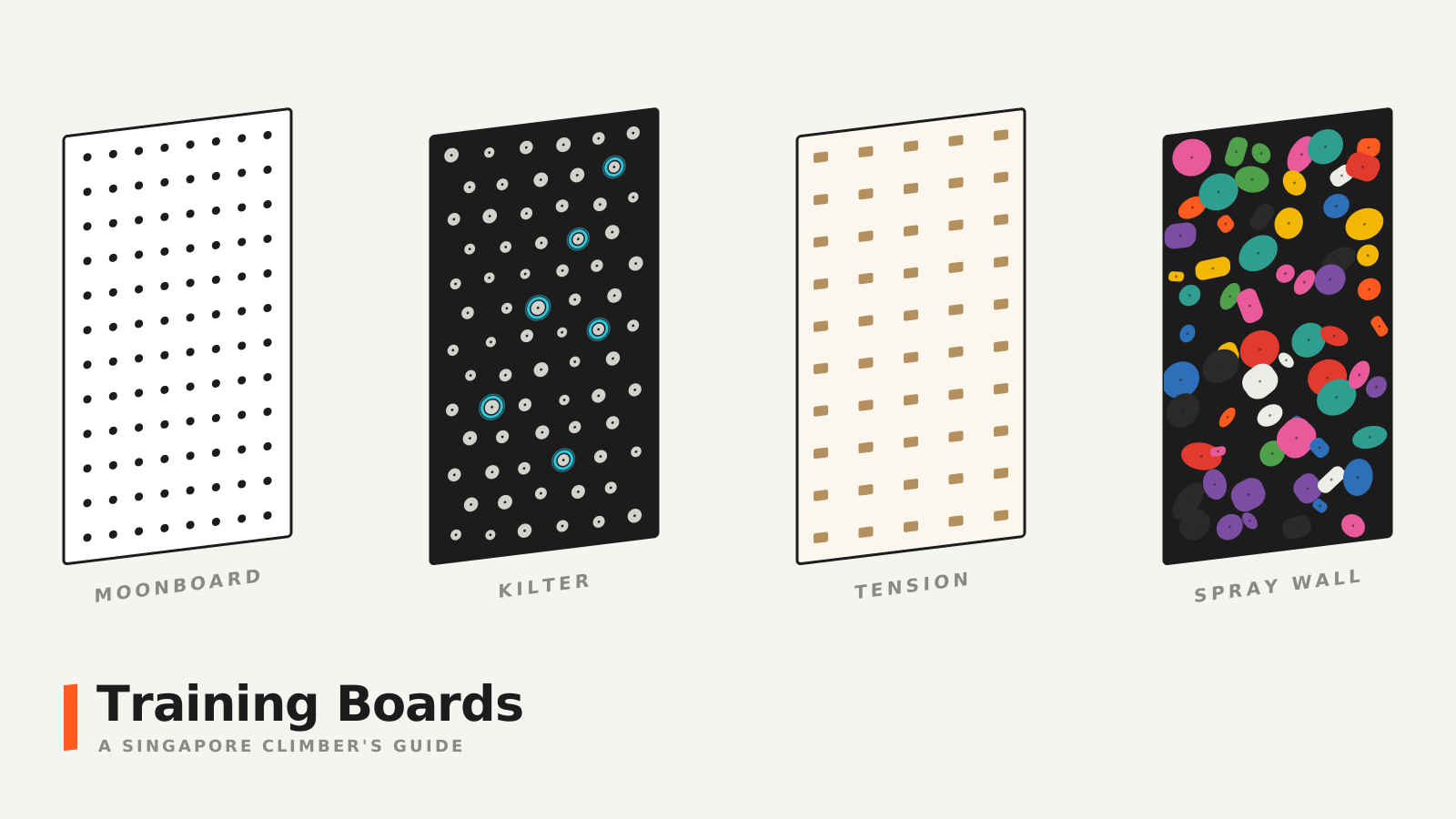
If you have spent any time in a Singapore bouldering gym, you have walked past one: a steep, densely bolted wall covered in identical holds, glowing with LEDs, usually with someone falling off it repeatedly and looking pleased about it. That is a training board, and it is the single most efficient piece of climbing equipment in the building.
This guide explains what each board is, how they differ, which Singapore gyms have which, and how to actually use one without wrecking your fingers in the first month.
What Makes a Board a Board
A training board is a standardised, steep climbing wall built for structured strength and technique work rather than route-setting variety. Two things separate it from a normal boulder wall.
Standardisation. For a given board and hold set, the wall dimensions and every hold position are identical in every gym worldwide. A V6 on the MoonBoard in Singapore is the same climb as a V6 on the MoonBoard in London. Your progress becomes measurable and comparable in a way that gym-set problems never are.
An app and LEDs. Pick a problem in the phone app, the relevant holds light up on the wall, you climb it. Behind that sits a database of tens of thousands of community-created problems with grades, ascent counts, and leaderboards. No setter required, no waiting for a reset.
Boards sit at a steep angle, typically between 25° and 70° overhanging, either fixed or adjustable. Steep terrain loads fingers, shoulders, and core hard in a very small footprint — which is exactly why a gym paying Singapore rents will squeeze one in.
The Big Three
MoonBoard
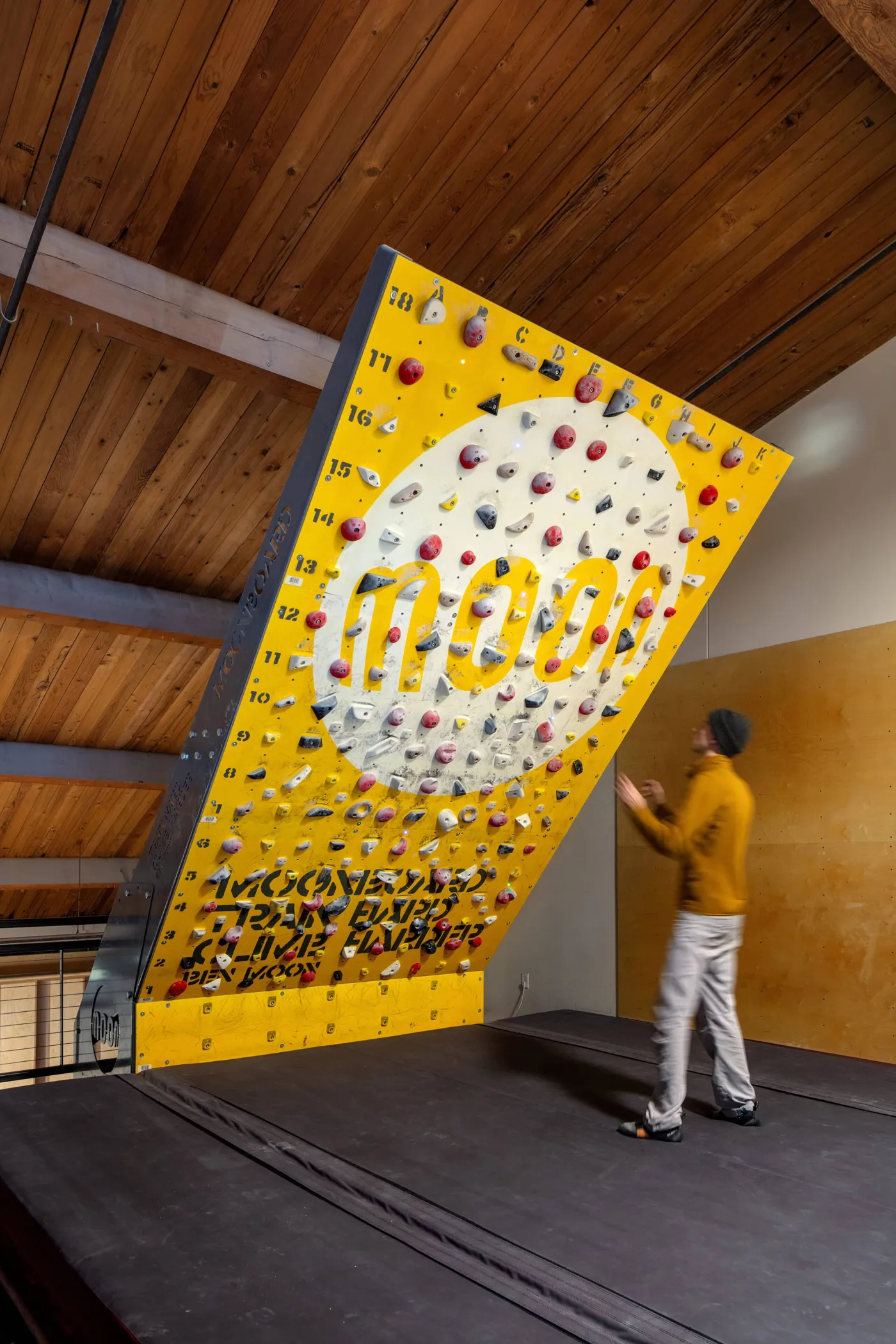
The original, built by Ben Moon in 2005. Every board that followed borrowed from its template.
It runs at a fixed 25° or 40° — no adjustability — on small, aggressive holds that mimic outdoor rock better than anything else on the market. It is relentlessly crimp- and finger-strength focused.
It also has a reputation as the stiffest board out there. Grades feel sandbagged, low-end problems are thin on the ground, and the whole thing rewards climbers who already have a base of finger strength. Multiple hold sets exist (2016, 2017, 2019, Masters), so a MoonBoard is really defined by which set at which angle. Ask before you assume.
Best for: climbers training for outdoor projects, or anyone whose weakness is honestly finger strength.
Kilter Board
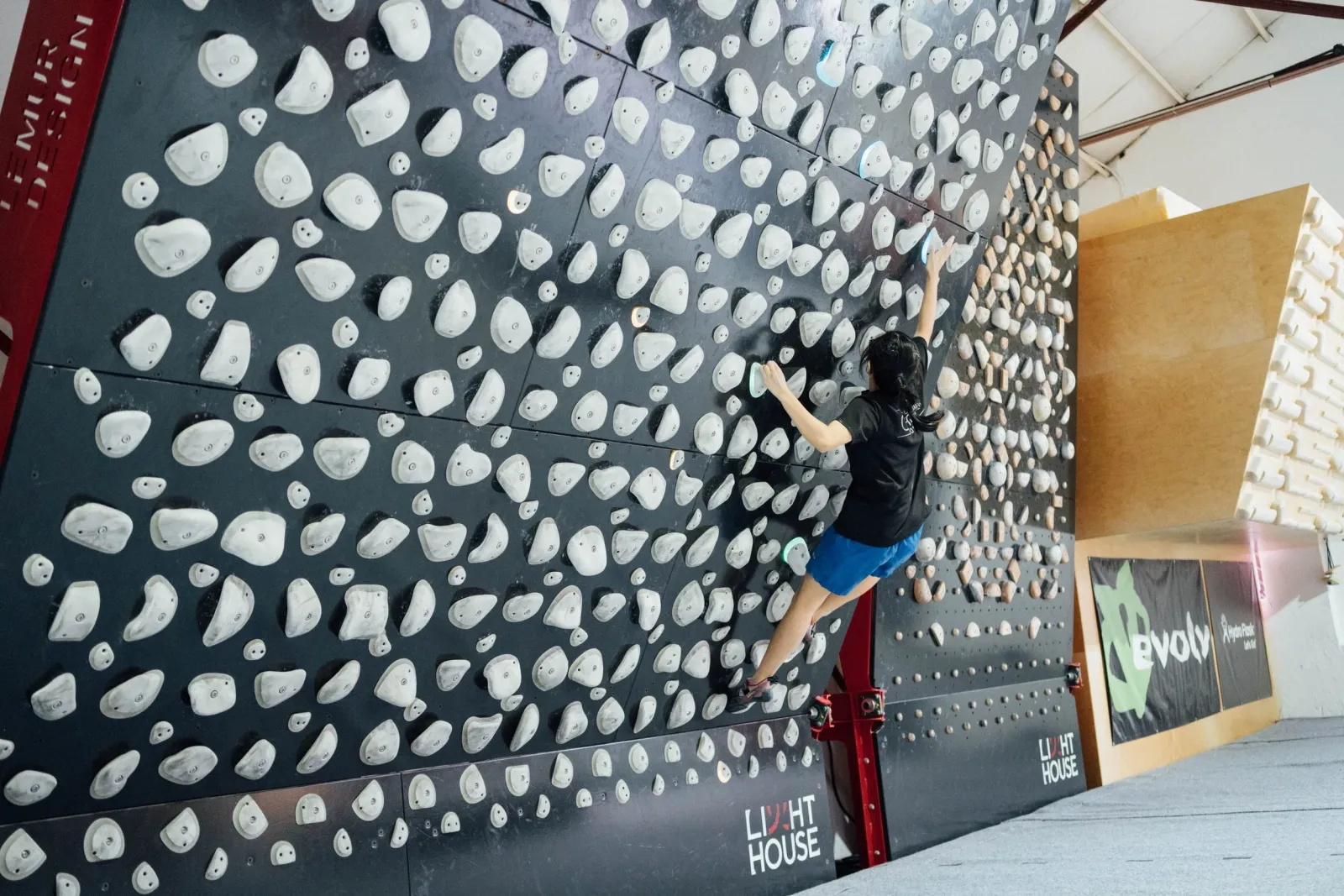
The newest of the big three, from Aurora Climbing, and by far the friendliest.
Its frame adjusts from 0° to 70° in 5° increments, so the same problems get easier or harder by tilting the wall rather than by changing holds. The holds are large, chunky and ergonomic, the hold density is the highest of any board, and the climbing area is the biggest. Lots of LEDs, lots of colour, lots of dynos.
That combination makes it the only board where a V2 climber has a genuinely good time. It trains power, movement, and volume rather than fingery precision.
Best for: your first board, and for power and volume sessions at any grade.
Tension Board
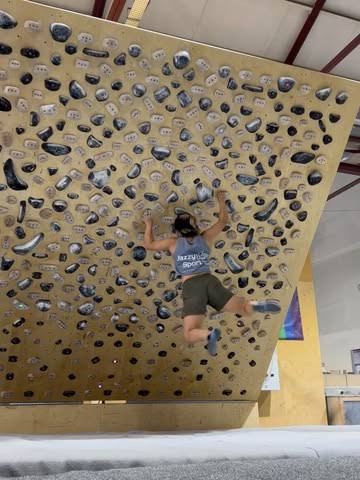
Tension Climbing's board is built around body tension, balance, and symmetric strength.
Its defining feature: the wooden holds are laid out symmetrically, mirror image left to right, so any problem can be climbed in mirror. Train a move on your weak side, then the same move on your strong side, and the difference is impossible to ignore. The Tension Board 2 is adjustable, comes in 8×10 ft and 8×12 ft sizes, and lights the full wall.
Wood is kinder on skin than plastic and stays consistent as it wears, at the cost of feeling less like real rock. In difficulty and hold size it sits between the MoonBoard and the Kilter.
Best for: fixing left-right imbalances, and for long sessions where skin is the limiting factor.
Grasshopper Board
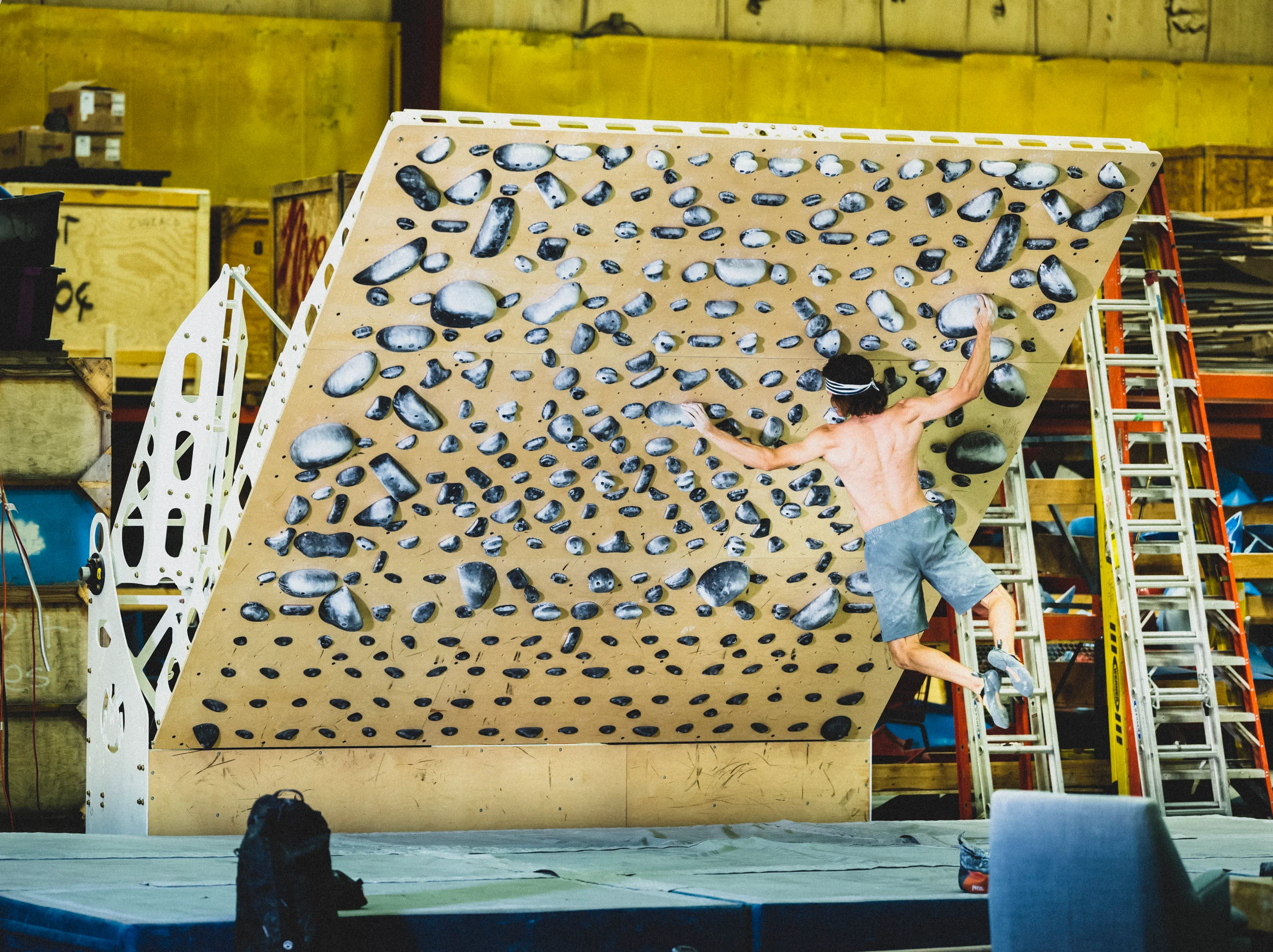
The newcomer, and the odd one out. Where the big three descend from outdoor-style training, the Grasshopper Board is designed around modern commercial gym setting — dynamic, coordination-heavy, volume-driven movement.
It rewards open-hand grip and comp-style problem solving rather than raw crimp strength. If your goal is to climb better on the sets your gym actually puts up, it maps more directly to that than a MoonBoard does.
Best for: competition-style movement and open-hand strength.
Spray Walls
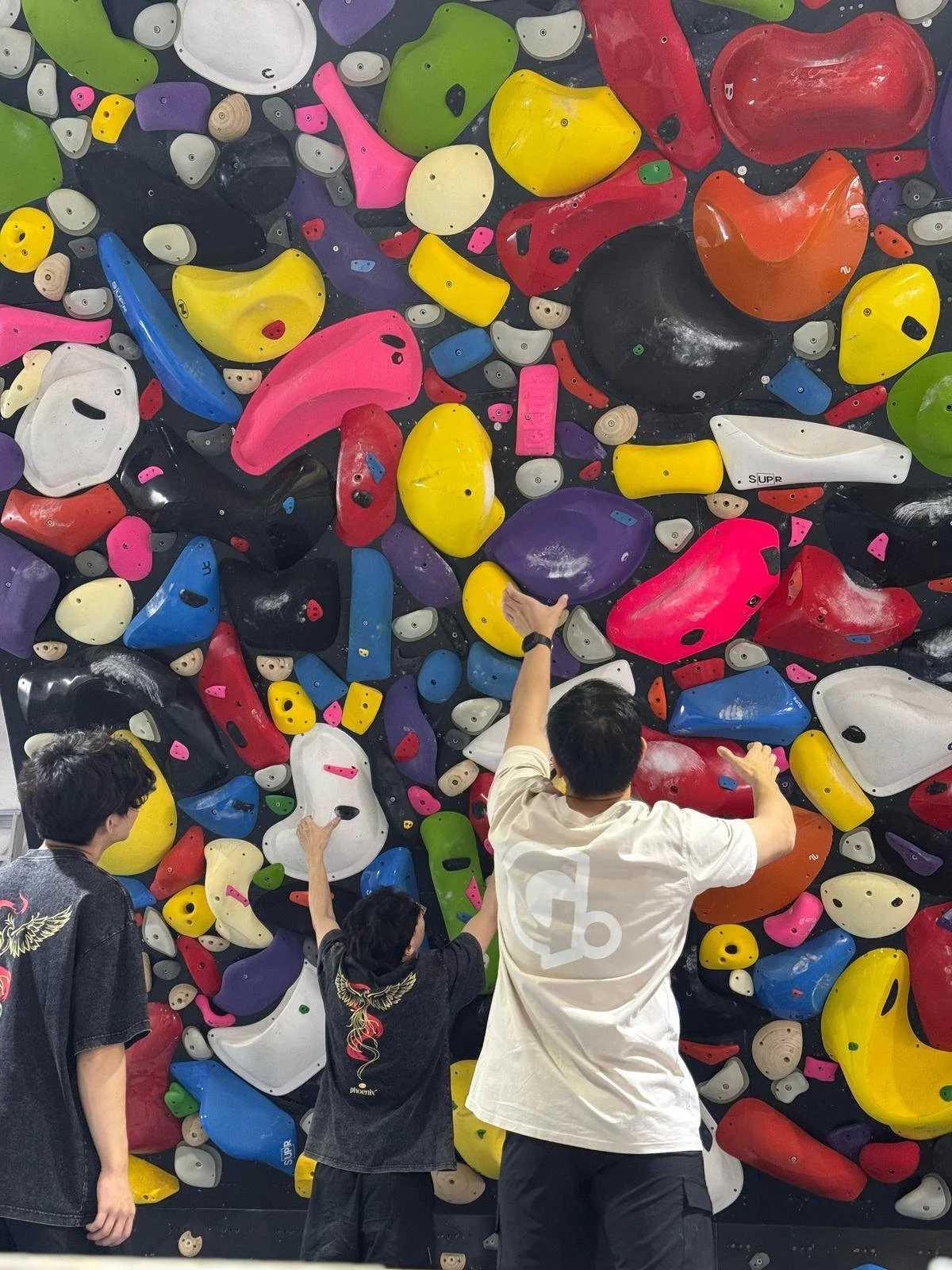
A spray wall is a steep wall plastered with a wide, deliberately chaotic mix of holds and volumes. No app, no LEDs, no standardisation. Every spray wall on earth is unique, and most of them change over time.
You make up your own problems — this hold to that hold, these feet, no cheating — which makes them infinitely flexible and effectively free for a gym to build. That flexibility is also the weakness: you cannot compare a spray wall session to anything outside your own gym, and it takes discipline to keep problems consistent enough to measure progress.
Do not dismiss them. Plenty of strong climbers do the majority of their strength work on a spray wall precisely because it lets them target one weakness exactly.
Quick Comparison
| Board | Angle | Holds | Trains | Best for |
|---|---|---|---|---|
| MoonBoard | Fixed 25° / 40° | Small, aggressive resin | Finger strength, crimping | Outdoor-style power, advanced |
| Kilter | Adjustable 0–70° | Large, ergonomic | Power, volume, all levels | Your first board, social sessions |
| Tension | Adjustable (TB2) | Symmetric wooden | Body tension, balance | Skin-friendly volume, imbalances |
| Grasshopper | Adjustable | Modern comp-style | Open-hand, coordination | Gym-style and comp movement |
| Spray wall | Fixed, gym-specific | Mixed, unstandardised | Anything you design | Targeted weakness work |
Which Singapore Gyms Have Which Board
Boards are recorded per outlet, not per gym brand — a chain having a Kilter at one location tells you nothing about the others. Here is the current picture:
| Outlet | Kilter | Moon | Tension | Grasshopper | Spray |
|---|---|---|---|---|---|
| Lighthouse (Pasir Panjang) | Lighthouse (Pasir Panjang) has a Kilter Board | Lighthouse (Pasir Panjang) has a MoonBoard | Lighthouse (Pasir Panjang) has a Tension Board | Lighthouse (Pasir Panjang) has a Spray wall | |
| Ground Up Climbing | Ground Up Climbing has a Kilter Board | Ground Up Climbing has a Spray wall | |||
| Kinetics Climbing | Kinetics Climbing has a Kilter Board | Kinetics Climbing has a MoonBoard | |||
| BFF Climb (Bendemeer) | BFF Climb (Bendemeer) has a MoonBoard | ||||
| Boulder Movement (Rochor) | Boulder Movement (Rochor) has a Kilter Board | ||||
| Boulder Planet (Tai Seng) | Boulder Planet (Tai Seng) has a MoonBoard | ||||
| Boulder Plus (Aperia) | Boulder Plus (Aperia) has a Spray wall | ||||
| Boulder Plus (Chevrons) | Boulder Plus (Chevrons) has a Kilter Board | ||||
| Climba | Climba has a Grasshopper Board | ||||
| Fit Bloc (Depot Heights) | Fit Bloc (Depot Heights) has a MoonBoard | ||||
| Fit Bloc (Kent Ridge) | Fit Bloc (Kent Ridge) has a Kilter Board |
- Lighthouse (Pasir Panjang)Kilter BoardMoonBoardTension BoardSpray wall
- Ground Up ClimbingKilter BoardSpray wall
- Kinetics ClimbingKilter BoardMoonBoard
- BFF Climb (Bendemeer)MoonBoard
- Boulder Movement (Rochor)Kilter Board
- Boulder Planet (Tai Seng)MoonBoard
- Boulder Plus (Aperia)Spray wall
- Boulder Plus (Chevrons)Kilter Board
- ClimbaGrasshopper Board
- Fit Bloc (Depot Heights)MoonBoard
- Fit Bloc (Kent Ridge)Kilter Board
A few things worth knowing beyond the table:
- Lighthouse Climbing (Pasir Panjang) is the reference training-board gym in Singapore, and the only outlet running four boards side by side. Their Kilter is a 12×12 ft panel adjustable across the full 0–70° range.
- Climba (Robinson Centre) has the only Grasshopper Board in the country, and board access is included in the day pass.
- Kinetics Climbing (Serangoon) pairs a Kilter with a MoonBoard, which is the most useful two-board combination if you want both accessible volume and hard fingery work.
- Angles are the one thing almost no Singapore gym publishes. A 40° MoonBoard is a completely different proposition from a 25° one. Message the gym before making a trip specifically to train.
Related Walls That Are Not Boards
Three more things live in the same corner of most gyms and get lumped in:
- Campus board — horizontal wooden rungs, climbed with no feet. Explosive contact strength. Genuinely advanced; it will find any weakness in your fingers and elbows before it builds anything.
- Systems board — matched pairs of identical holds for repetitive, symmetric drills. Boring and effective.
- Hangboard — the small board of edges and pockets by the door, for isolated finger-strength hangs. Present in almost every gym, and the highest-value training tool per square metre in the sport.
How to Actually Start
Pick the right board. Below roughly V4, start on a Kilter and drop the angle to 20°–30°. Above that, the MoonBoard and Tension Board become worth the trip.
Warm up properly first. Boards have no easy holds and no gentle sequences. Climb 20–30 minutes of normal problems and get through a full finger and shoulder warm-up before you touch one. Most board injuries happen in the first ten minutes of a session.
Keep the session short. 45–60 minutes of board work is plenty. Pick 4–6 problems near your limit, give each 3–5 attempts with 3–5 minutes of rest between goes, and stop when the quality of your movement drops rather than when you run out of time.
Cap it at twice a week, on non-consecutive days. Board climbing loads the fingers far harder than gym problems at the same grade, and tendons adapt much more slowly than muscle.
Ignore the grades at first. Board grades run stiff, and MoonBoard grades run stiffest of all. Dropping several V-grades below your gym level is normal and says nothing about you.
Log what you climb. The whole point of a standardised board is that the data means something. The apps track ascents and attempts for free — six months of logs will tell you more about your climbing than any amount of guessing.
The Short Version
If you have never touched a board, go find a Kilter, set it shallow, and climb for half an hour. If you have been climbing a couple of years and your fingers are your weak link, find a MoonBoard and be patient with it. If one side of your body is quietly carrying the other, get on a Tension Board and climb everything twice, mirrored.
And whichever you choose: warm up first, stop early, and write it down.